
Parents often notice a child consistently tilting their head to look at something — the TV, a book, or a face across the room. That tilt is frequently the eyes’ way of compensating for a vision or alignment problem, which is why the cause is worth understanding.
Why does my child tilt their head to see?
A child usually tilts their head to see because the brain is compensating for an eye-alignment or vision problem. The most common causes are strabismus (crossed or misaligned eyes), nystagmus (involuntary eye movement), or a refractive error that needs glasses. Sometimes it’s the neck, not the eyes. As of 2026, any persistent head tilt should be checked with a complete eye exam.
An abnormal head posture is one of the patterns the pediatric ophthalmologists at Pediatric Eye Specialists evaluate regularly. The practice has cared for North Texas families since 2002, with four fellowship-trained specialists have trained at institutions distinguish eye-driven head tilts from other causes through a complete pediatric eye exam.
How can I tell if my child’s head tilt is from their eyes or their neck?
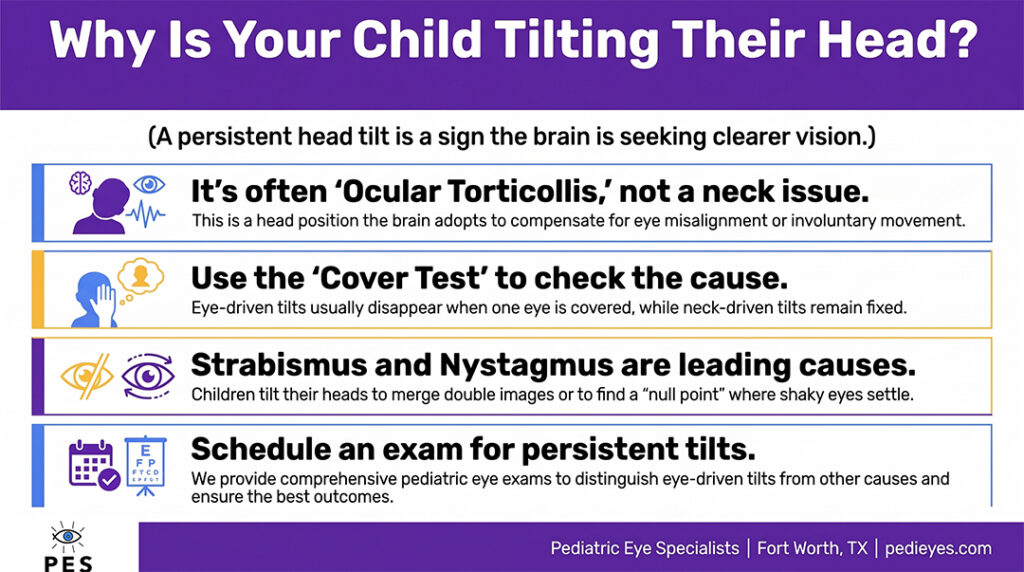
An eye-driven head tilt usually eases or disappears when one eye is covered or while the child is asleep, and the neck still moves freely in every direction. A neck-driven tilt, called muscular torticollis (a tight neck muscle), stays put when an eye is covered and limits how far the head can turn. A pediatric eye exam confirms the source.
Can strabismus (crossed eyes) cause head tilting in children?
Yes — strabismus (crossed or misaligned eyes) is a leading cause of head tilting in children. When the eyes don’t line up, a child may tilt or turn the head to merge the two images and avoid double vision. One common form is superior oblique palsy. It produces a head tilt away from the affected eye — the brain’s way of seeing a single, clear image.
Strabismus is a core focus for the four pediatric ophthalmologists at Pediatric Eye Specialists, who provide both non-surgical and surgical management. When surgery is appropriate, it’s performed at Cook Children’s Medical Center, with its specialized pediatric anesthesia and nursing teams.
What eye conditions cause a child to tilt their head?
Several eye conditions can cause a child to tilt their head. The main ones are strabismus (misaligned eyes), especially superior oblique palsy; nystagmus (involuntary eye movement) with a “null point”; significant refractive error or astigmatism; and ptosis (droopy eyelid) blocking part of the field of view. In each case, the child adopts a head position that gives the clearest, most comfortable vision.
What is ocular torticollis?
Ocular torticollis is a head tilt or turn the brain adopts to compensate for an eye problem, not a neck condition. The child positions the head to align the eyes, dampen abnormal eye movement, or simply see more clearly. It differs from muscular torticollis, which starts in a tight neck muscle. Identifying the type guides the right care.
Can nystagmus (dancing eyes) cause a child to tilt their head?
Yes — many children with nystagmus (involuntary, rhythmic eye movement) have a “null point,” a gaze position where the eye movement settles and vision is clearest. To keep their eyes in that null point, they often turn or tilt the head consistently in one direction. The head posture is a sign the child is reaching for their sharpest available vision.
Start your child’s journey to better vision today.
Embrace a future of clearer vision and confidence for your child. Contact us now to book your consultation at any of our convenient locations across the Metroplex.
Does a head tilt mean my child needs glasses?
Sometimes. An uncorrected refractive error, especially astigmatism, can lead a child to tilt the head to sharpen blurry vision, and glasses may resolve it. But a head tilt isn’t always refractive — it can also signal strabismus or nystagmus. Because the causes overlap, a complete eye exam is the reliable way to tell whether glasses alone will help.
When should I worry about my child’s head tilt?
A head tilt needs prompt evaluation when it’s persistent, comes on suddenly, or appears with squinting, eye misalignment, abnormal eye movements, or double vision. A sudden, new tilt matters most. It can occasionally reflect a neurological cause. The American Academy of Pediatrics recommends evaluating a head tilt that doesn’t go away.
The pediatric ophthalmologists at Pediatric Eye Specialists evaluate head tilts and abnormal head postures as part of routine children’s eye care, helping families understand both the cause and the next step. Early evaluation supports the best outcomes for conditions like strabismus and amblyopia (lazy eye).
When should I see a pediatric eye specialist in North Texas about my child’s head tilt?
A persistent or unexplained head tilt should be evaluated by a fellowship-trained pediatric ophthalmologist, who can determine whether the cause is the eyes or the neck and pinpoint the specific condition. Most ocular causes of head tilt are treatable, especially when found early — through glasses, patching, prism, or eye-muscle surgery for strabismus. As of 2026, a complete pediatric eye exam remains the standard first step.
Pediatric Eye Specialists has cared for North Texas families since 2002, with four fellowship-trained, board-certified pediatric ophthalmologists across Fort Worth, Keller, Mansfield, and Prosper. Surgeries, when needed, take place at Cook Children’s Medical Center, and the practice accepts Medicaid.
If your child’s head tilt persists, the pediatric ophthalmologists at Pediatric Eye Specialists can help identify the cause. Schedule an appointment at one of their four North Texas locations in Fort Worth, Keller, Mansfield, or Prosper, or call (817) 529-9949.
Medically Reviewed By:
Michael G. Hunt, MD
Board-Certified Ophthalmologist
Fellowship-Trained Pediatric Ophthalmology and Adult Strabismus
Last reviewed August 7, 2026
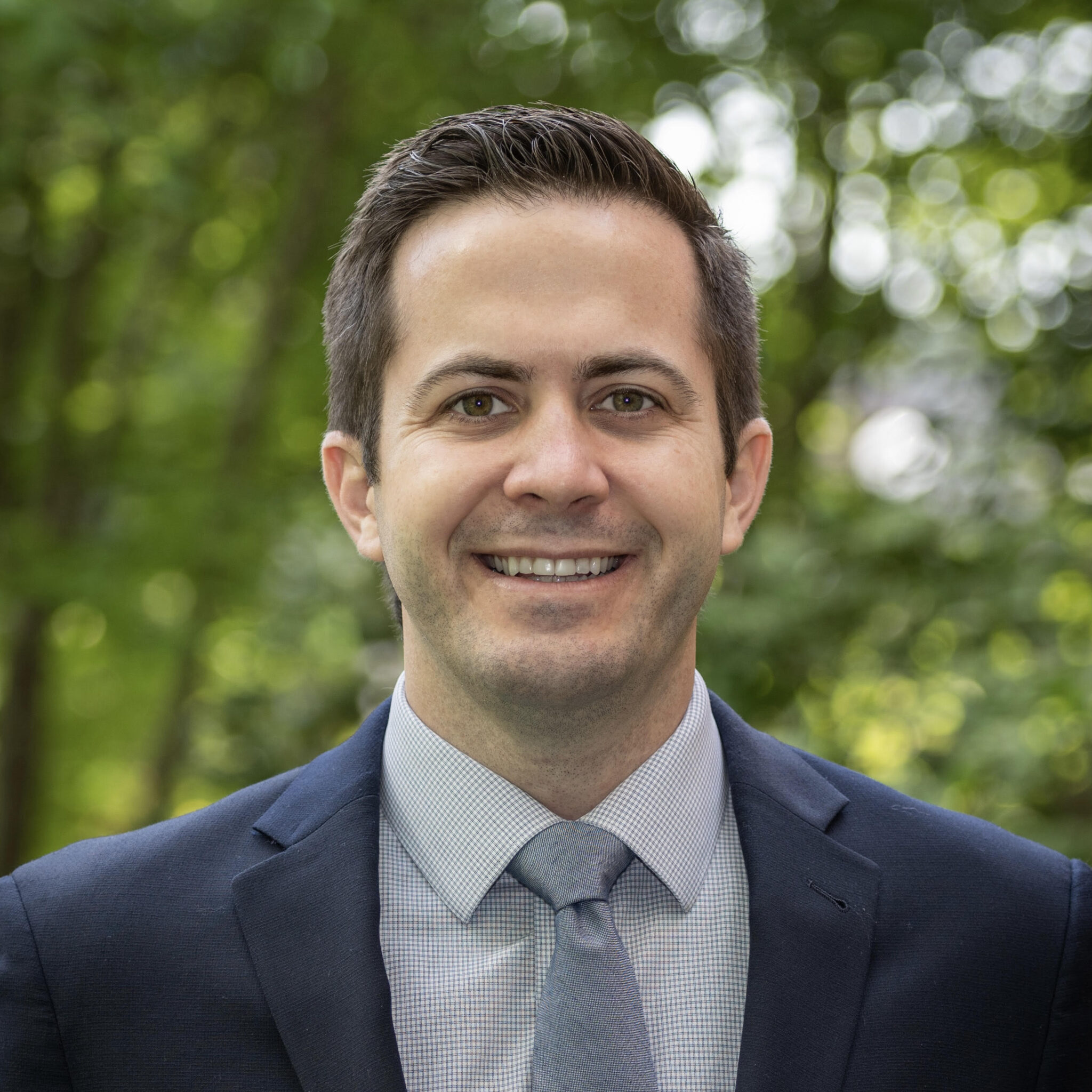
David F. Skanchy, MD is a board-certified ophthalmologist and fellowship-trained pediatric ophthalmologist and adult strabismus specialist at Pediatric Eye Specialists. He completed his residency and pediatric ophthalmology/adult strabismus fellowship at the Kellogg Eye Center at the University of Michigan, where he served as chief resident. A member of the American Academy of Ophthalmology and AAPOS, he treats the full range of pediatric eye conditions and specializes in complex strabismus, amblyopia, pediatric cataracts, and retinopathy of prematurity.